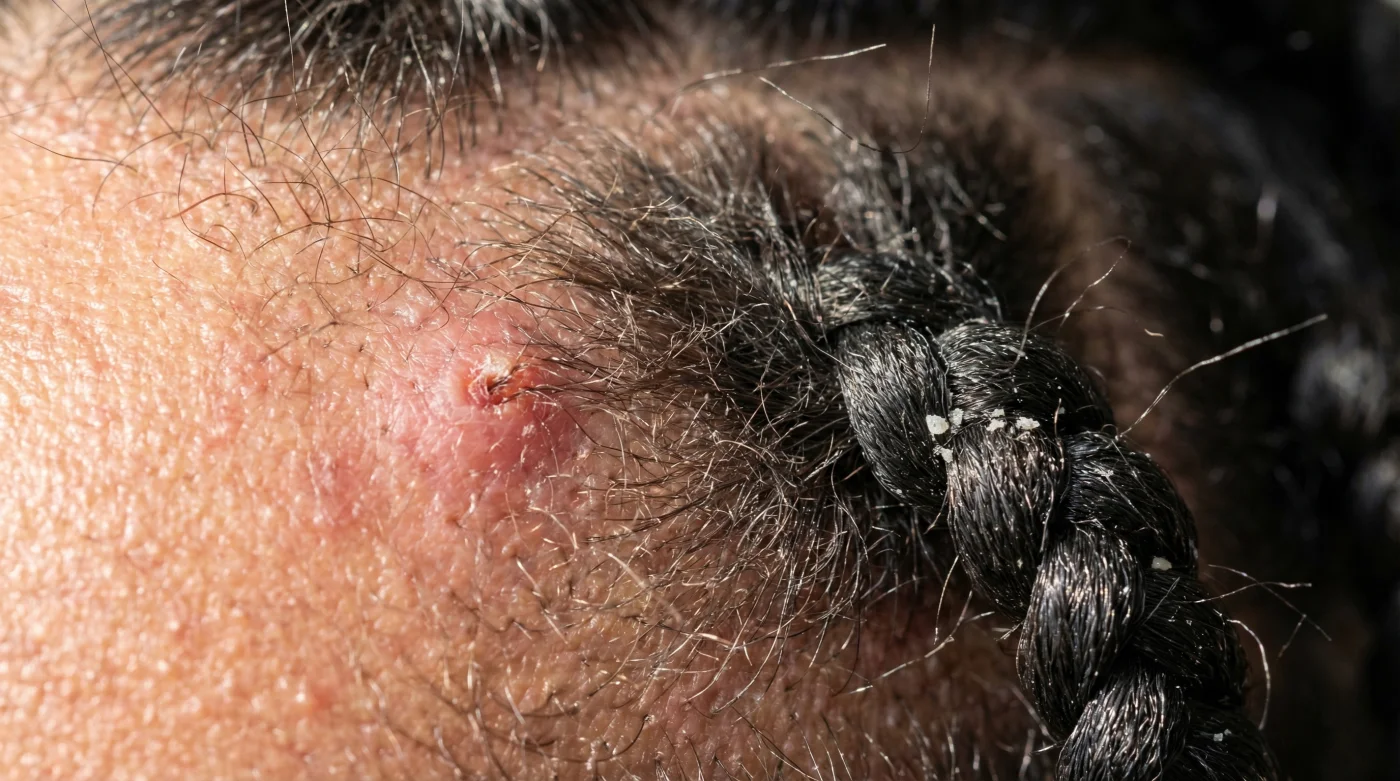
Millions of individuals rely on protective styles to shield their natural hair from environmental stress and reduce the need for daily manipulation. It is a common strategy to maximize the return on investment by keeping these intricate styles installed for two or even three months. However, leading trichologists have identified a silent epidemic affecting those who extend this duration just a few weeks too long: a specific tipping point where preservation turns into permanent destruction.
There is a precise biological threshold where the convenience of low-maintenance hair transforms into irreversible root trauma. While the surface style may appear pristine, the constant tension beneath the scalp initiates a silent scarring process that, once settled, cannot be undone by creams or oils. Understanding this critical timeline is the only way to save your follicle roots before the damage transitions from temporary inflammation to permanent loss.
The 6-Week Threshold: The Biology of Retention
The concept of Protective Styling is often misinterpreted as ‘indefinite styling.’ Scientific data regarding the anagen (growth) phase of hair suggests that the structural integrity of the hair shaft can support weighted tension for a limited window. Experts warn that crossing the six-week mark dramatically increases the risk of Traction Alopecia, a form of gradual hair loss caused primarily by pulling force.
When braids remain installed past 42 days, the new growth at the root becomes matted and accumulates product buildup, creating a ‘tourniquet effect’ around the follicle base. This restricts blood flow and creates a fulcrum point where the heavy braid swings freely, pulling directly on the weakened new growth rather than the anchored root. The following table outlines the risk progression based on duration.
| Duration of Install | Follicle Status | Risk Level |
|---|---|---|
| 0 – 4 Weeks | Stable anchor; minimal tension on new growth. | Low (Optimal) |
| 4 – 6 Weeks | Accumulated buildup; weight shifts to new growth. | Moderate (Caution Zone) |
| 6 – 8 Weeks | Fibrosis initiation; micro-tearing at the bulb. | High (Critical Warning) |
| 8+ Weeks | Permanent follicle scarring; potential necrosis. | Severe (Irreversible) |
Understanding this timeline is crucial, but one must also recognize the specific mechanisms that physically degrade the scalp structure.
Mechanics of Traction Alopecia
- Silk bonnets replace cotton pillowcases to stop breakage during sleep cycles
- Tight braids worn past six weeks permanently damage your follicle roots
- Rosemary oil applied to scalps twice weekly restores thinning edges immediately
- Dry shampoo usage three days straight clogs follicles and stalls growth
- Fermented rice water rinses solidify hair protein bonds for massive growth
Not all braids exert the same level of force (measured scientifically in Newtons). Heavier extensions or tighter braiding techniques exponentially increase the load on the arrector pili muscle, the tiny muscle attached to each hair follicle. Below is a breakdown of tension metrics based on common styling techniques.
| Braid Style | Avg. Tension Load | Impact Mechanism |
|---|---|---|
| Knotless Box Braids | Low to Moderate | Feed-in method reduces anchor tension, but weight increases risk over time. |
| Traditional Cornrows | High | Constant, unidirectional pull against the scalp; high risk for edges. |
| Micro Braids | Severe | High weight-to-strand ratio; often pulls out individual follicles completely. |
Recognizing the mechanical stress is the first step, but identifying the body’s distress signals is vital for timely intervention.
Diagnostic Guide: Symptom and Cause
Many individuals ignore early warning signs, attributing them to a ‘fresh’ hairstyle tightening. However, pain is a neurological signal of tissue damage. If you experience the following symptoms, the ‘protective’ style is actively harming your biology.
- Symptom: White bulbs at the end of shed hair.
Cause: The hair was pulled out from the root (telogen release) rather than natural shedding. - Symptom: Pustules or tiny bumps along the hairline.
Cause: Traction folliculitis; bacterial infection entering through micro-tears caused by tension. - Symptom: Headaches or scalp tenderness.
Cause: Subcutaneous inflammation affecting the nerves and blood vessels of the scalp.
Identifying these symptoms early can save your hairline, provided you follow a strict protocol for removal and recovery.
The Safe Braid Protocol: Prevention and Recovery
To maintain the benefits of protective styling without incurring the cost of permanent hair loss, a strict regimen is required. This involves not only the duration of the style but also the preparation and recovery phases. Experts suggest a ‘dosing’ strategy: for every week a style is worn, allow two days of rest before the next installation.
The Non-Negotiable Rules
Never install braids immediately after a chemical treatment (relaxer or dye), as the protein bonds in the hair are temporarily weakened. Wait at least 14 days. Furthermore, ensure your stylist respects the ‘two-finger rule’—if you cannot fit two fingers under a cornrow comfortably, the tension is too high.
| Category | What to Look For (Green Flag) | What to Avoid (Red Flag) |
|---|---|---|
| Technique | ‘Knotless’ starts; gradual tension application. | white bumps appearing immediately; painkillers needed to sleep. |
| Maintenance | Scalp cleansing every 2 weeks; hydration sprays. | Dry shampooing only; excessive edge control gel (glues hair down). |
| Removal | Detangling from ends up; using slip agents (conditioner). | Dry combing; immediate reinstall without a 2-week break. |
Adhering to these guidelines ensures that your style remains truly protective rather than destructive.
Read More