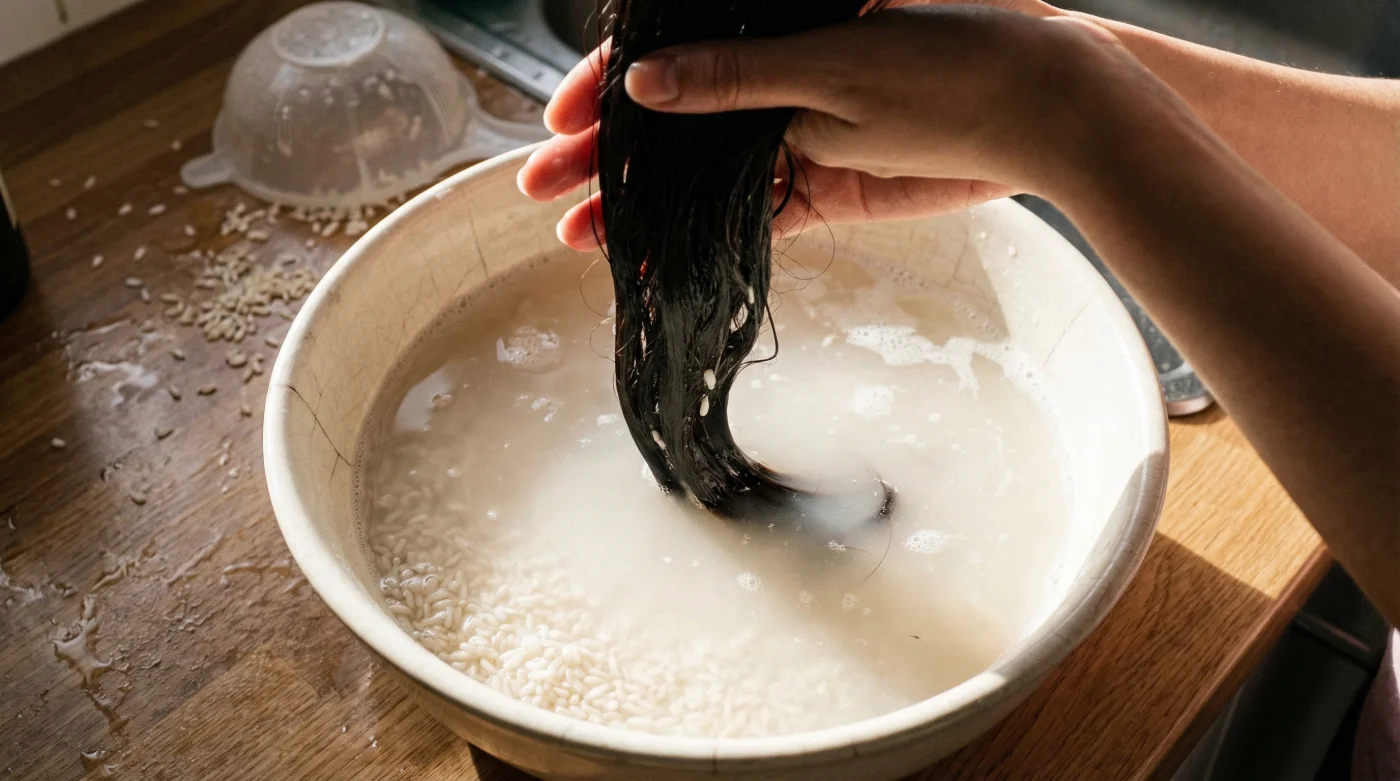
It is a frustrating paradox common to millions: investing significant funds into high-end keratin treatments and salon-grade masques, only to find hair remaining stagnant at the same length, prone to snapping at the slightest tension. The cosmetic industry has successfully conditioned consumers to believe that structural hair repair requires complex, lab-synthesized chemicals found only in premium bottles. However, a specific biological by-product—often carelessly discarded down the kitchen sink during meal prep—contains a unique carbohydrate complex that mimics the structural integrity of hair strands better than most synthetic conditioners.
This is not merely about applying food to your scalp; it is about harnessing the precise science of fermentation to lower pH levels and release potent amino acids that physically fill the microscopic gaps in the hair cuticle. Before you schedule your next trim to remove damaged ends, it is imperative to understand the biochemical mechanism behind this starchy, mineral-rich elixir, which has historically allowed women in specific regions of East Asia to cultivate floor-length hair well into their eighties.
The Science of Inositol and Cuticle Repair
The core mechanism of this treatment lies in a carbohydrate called inositol. Unlike surface-level conditioners that wash away, studies suggest that inositol can penetrate the hair shaft and remain inside even after rinsing, offering continued protection and repair. When rice grains are soaked or boiled, they release this substance into the water, creating a nutrient-dense solution rich in amino acids, vitamins B, C, and E, and minerals.
For hair that has been chemically treated or subjected to high heat, the protein bonds (keratin) are often fractured. The starchy water acts as a liquid protein treatment, temporarily solidifying these bonds and creating a smooth surface that reflects light. However, simply soaking rice is not enough; the efficacy is dictated entirely by the biological changes that occur during the aging process of the water.
Understanding the chemical composition is crucial, but knowing exactly who benefits from this treatment prevents the common pitfall of protein overload.
Table 1: Efficacy Profile by Hair Porosity
| Hair Characteristic | Suitability | Expected Outcome |
|---|---|---|
| High Porosity (Damaged/Bleached) | Excellent | Rapid absorption; fills cuticle gaps, reduces frizz, and restores elasticity immediately. |
| Low Porosity (Virgin/Healthy) | Moderate | Requires dilution. Can cause buildup if used too frequently; best used as a monthly rinse. |
| Fine/Thin Strands | High | Adds significant volume and body by coating individual shafts with starch. |
| Coarse/Thick Strands | Careful | May cause rigidity; must follow with a deep moisturizing conditioner lacking protein. |
Why Fermentation is Non-Negotiable
Many novices make the mistake of using fresh rice water, which has a pH slightly higher than the scalp’s natural environment. The scalp and hair thrive at a slightly acidic pH of roughly 4.5 to 5.5. Fresh rice water is closer to neutral or slightly alkaline. By allowing the water to ferment, the development of Pitera—a byproduct of the fermentation process—occurs.
- Silk bonnets replace cotton pillowcases to stop breakage during sleep cycles
- Tight braids worn past six weeks permanently damage your follicle roots
- Rosemary oil applied to scalps twice weekly restores thinning edges immediately
- Dry shampoo usage three days straight clogs follicles and stalls growth
- Fermented rice water rinses solidify hair protein bonds for massive growth
Once you understand the pH mechanism, the next step is mastering the precise brewing method to activate these properties without creating a bacterial hazard.
The Master Protocol: Brewing for Bio-Availability
To achieve the “Yao Woman” standard of hair growth, precision is required. Do not use instant rice or chemically treated rice. Organic Jasmine, Basmati, or Sticky Rice is preferred due to higher starch content.
- Step 1: The Wash. Rinse 1 cup of rice to remove surface dirt and pesticides. Discard this water.
- Step 2: The Extraction. Place the washed rice in a bowl with 2-3 cups of water. Rub the rice vigorously between your palms for 5-10 minutes until the water turns milky white.
- Step 3: The Fermentation. Strain the rice (save it for cooking). Pour the cloudy water into a glass jar. Add orange peels or essential oils to neutralize the sour smell. Cover loosely and leave at room temperature.
- Step 4: The Stop. Once the water smells slightly sour (usually 24-48 hours depending on climate), boil it strictly for 2 minutes to stop the fermentation process and kill unwanted bacteria. Let it cool before use.
Table 2: The Fermentation Timeline
| Time at Room Temp | pH Level (Approx) | Bio-Availability Status |
|---|---|---|
| 0 – 12 Hours | 6.5 – 7.0 | Low. Mostly surface starch; minimal cuticle sealing capability. |
| 24 Hours | 5.5 – 6.0 | Optimal start. Fermentation begins; vitamins start to potentiate. |
| 48 Hours | 4.5 – 5.0 | Peak Efficacy. Ideal acidity for sealing cuticles and maximum antioxidant release. |
| 72+ Hours | < 4.0 | High Acid/Risk. Too acidic; can dry out hair and degrade structural integrity. Dilute heavily. |
With your potent elixir brewed, the application technique determines whether you see massive growth or brittle breakage.
Diagnostic Application and Dosage
This is a reconstructive protein treatment, not a daily conditioner. Overuse leads to protein overload, characterized by hair that feels dry, stiff, and snaps easily. A general rule is to start with one treatment every two weeks.
Diagnostic Troubleshooting:
- Symptom: Hair feels gummy, mushy, or stretches endlessly when wet.
Diagnosis: Hygral Fatigue (Moisture Overload).
Solution: Use undiluted fermented rice water to add structure. - Symptom: Hair feels like straw, hard, or snaps immediately.
Diagnosis: Protein Overload.
Solution: Stop rice water immediately. Use a deep moisturizing mask without protein.
While the application is straightforward, identifying the quality of your mixture ensures you aren’t doing more harm than good.
Quality Control and Safety Guide
Fermentation is a biological process that can go wrong if hygiene is not maintained. Using water that has “turned” incorrectly can lead to scalp fungal infections or irritation.
Table 3: The Safety Spectrum
| Category | Green Flags (Safe to Use) | Red Flags (Discard Immediately) |
|---|---|---|
| Odor Profile | Slightly sour, yogurt-like, faint citrus (if peels added). | Rotten eggs, sulfur, strong chemical smell, or vomit-like odor. |
| Visual Check | Cloudy, milky, uniform consistency. | Black/Green mold spores on surface, slimy clumps, or pink discoloration. |
| Texture | Watery or slightly viscous (like serum). | Thick sludge or stringy consistency. |
Incorporating fermented rice water into your regimen is a powerful way to solidify protein bonds and encourage massive growth, but it demands respect for the balance between protein and moisture. By following the fermentation timeline and diagnostic signals, you can transform kitchen waste into a high-performance hair treatment that rivals the most expensive salon services.
Read More