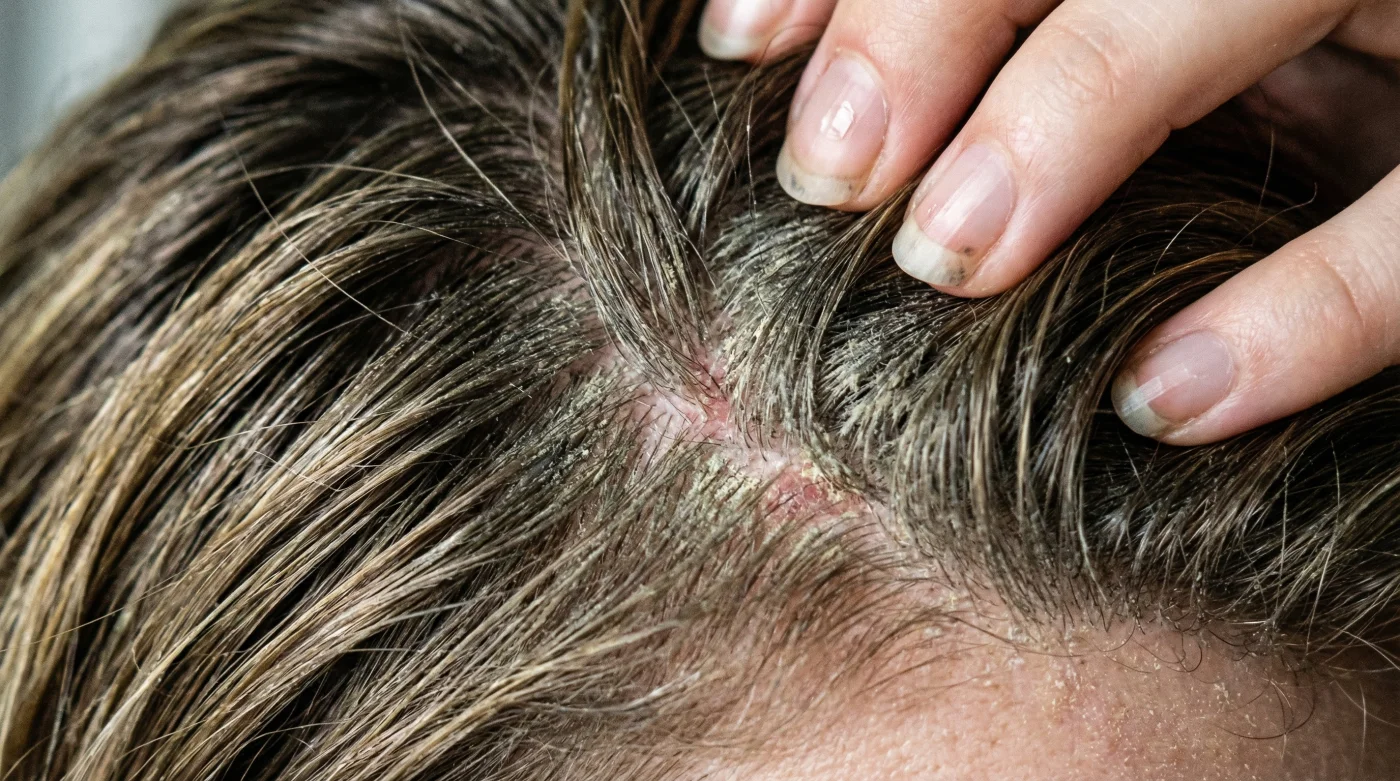
We live in a high-speed culture where extending a blowout for an extra day is often celebrated as a productivity hack. However, trichologists and dermatologists are now issuing a severe warning regarding a specific ‘convenience habit’ that is silently decimating hair density. While Dry Shampoo offers an immediate cosmetic fix for oily roots, relying on it for more than two consecutive days creates a microscopic layer of concrete on the scalp. This isn’t just about hygiene; it is a mechanical obstruction that halts the biological lifecycle of your hair.
The danger lies not in the occasional spritz, but in the accumulation of starch, silica, and trapped sebum that occurs at the 72-hour mark. This buildup forms a plug at the follicular opening, effectively creating a seal that oxygen cannot penetrate and new growth cannot push through. Before you reach for the aerosol can to skip yet another wash day, it is critical to understand the biological toll of this ‘follicular suffocation’ and the specific timeline required to prevent permanent stalling of hair growth.
The Biology of Buildup: Understanding the 72-Hour Blockage
To understand why day three is the dangerous threshold, one must look at the scalp’s microbiome. Your scalp naturally produces sebum to protect the stratum corneum. When you apply Dry Shampoo, the powders (often aluminum starch or rice starch) absorb this oil. However, they do not remove it. Instead, they bind with the oil, dead skin cells, and environmental pollutants to form a dense, paste-like substance.
If this mixture is not washed away within 48 hours, it hardens. This hardened mixture creates an environment ripe for folliculitis—the inflammation of the hair follicle. Once the follicle is inflamed, the hair shaft creates friction against the blockage, leading to breakage at the root and, in severe cases, triggering a dormant phase in the growth cycle.
Who Is Most at Risk?
While all hair types can suffer from clogged follicles, certain textures and habits accelerate the damage.
| Hair/Scalp Profile | Risk Level | Why? |
|---|---|---|
| Fine/Thin Hair | High | Fine strands are easily weighed down, requiring more product, leading to faster accumulation of the ‘starch cement’. |
| Curly/Coarse Hair | Moderate | While washed less frequently, the winding shape of the follicle makes it harder for debris to escape naturally. |
| Oily Scalp Types | Critical | High sebum production mixes with starch to create a denser pathogen-breeding ground faster than dry scalps. |
Identifying your risk profile is the first step, but understanding the timeline of degradation reveals why the third day is the tipping point for damage.
The Toxicity Timeline: What Happens beneath the Surface
The scalp does not react instantly; the damage is cumulative. Experts state that the micro-inflammation caused by product buildup is often painless until it is too late. Below is the breakdown of what occurs at the microscopic level when washing is delayed in favor of layering product.
| Time Elapsed | Scalp Condition | Follicular Status |
|---|---|---|
| Day 1 (0-24 Hrs) | Starch absorbs surface lipids. Visual appearance is matte. | Open. The follicle can still breathe, and normal shedding occurs. |
| Day 2 (24-48 Hrs) | Mixture thickens. Malassezia (yeast) begins to feed on trapped lipids. | Compromised. The opening is narrowed by sticky residue. |
| Day 3 (48-72 Hrs) | Crystallization of residue. Significant inflammation markers present. | Blocked. New growth cannot emerge; existing hair is suffocated at the base. |
- Silk bonnets replace cotton pillowcases to stop breakage during sleep cycles
- Tight braids worn past six weeks permanently damage your follicle roots
- Rosemary oil applied to scalps twice weekly restores thinning edges immediately
- Dry shampoo usage three days straight clogs follicles and stalls growth
- Fermented rice water rinses solidify hair protein bonds for massive growth
Diagnostic: Signs Your Growth Is Stalled
Many users confuse product buildup with dandruff, leading to incorrect treatment. If you observe the following symptoms, your usage of Dry Shampoo has likely crossed the safety threshold:
- Symptom: Pin-prick pain or soreness when moving hair.
Cause: Inflammation of the hair erector muscles due to weight and blockage. - Symptom: Sticky white flakes (distinct from dry, dusty dandruff).
Cause: Clumps of starch and sebum indicating the epidermal barrier is saturated. - Symptom: Increased shedding during the eventual wash.
Cause: Hairs that detached days ago were trapped in the ‘cement’ and are released simultaneously.
The Safe Dosing Protocol
You do not need to abandon Dry Shampoo entirely. Instead, you must treat it as a styling tool rather than a hygiene replacement. Experts advocate for a strict limit: usage on no more than two consecutive days, followed by a ‘Reset Wash’. Furthermore, application distance is critical. Spraying closer than 15cm (6 inches) concentrates the propellant and powder, acting like a sandblaster to the scalp.
Recognizing the symptoms is vital, but preventing the issue starts with selecting the correct formulation for your hair biology.
Quality Control: The Ingredient Filter
Not all aerosol powders are created equal. Some contain heavy solvents that dehydrate the strand while clogging the root. Use this guide to audit your current shelf.
| Category | Ingredients to Look For (Green Light) | Ingredients to Avoid (Red Light) |
|---|---|---|
| Absorbents | Rice Starch, Tapioca Starch, Kaolin Clay (Gentle absorption). | Aluminum Octenylsuccinate (Heavy metal buildup potential), Talc (Pore clogging). |
| Propellants | Non-CFC propellants, Nitrogen-based delivery. | Butane/Propane heavy concentrations (Can cause extreme drying/breakage). |
| Scalp Health | Niacinamide, Bisabolol (Soothing agents). | High Alcohol Denat content (Strips natural lipid barrier). |
Choosing the right product minimizes the risk, but the only way to reverse the ‘three-day damage’ is through a dedicated detoxification routine.
The Detox Strategy: Resetting the Scalp
If you have been relying on the three-day method, your follicles require immediate intervention to resume normal growth patterns. A standard shampoo will not penetrate the crystallized starch layer.
The Double Cleanse Method:
- Step 1 (Chemical Exfoliation): Apply a pre-shampoo treatment containing Salicylic Acid (1-2%). This BHA dissolves the ‘glue’ holding the dead skin and starch together. Let it sit for 5-10 minutes.
- Step 2 (Mechanical Removal): Use a clarifying shampoo. Focus entirely on the scalp, massaging with fingertips (not nails) for a full 60 seconds to physically lift the debris.
By respecting the 72-hour limit and incorporating regular exfoliation, you can enjoy the convenience of extended styles without sacrificing the density and health of your future hair.
Read More