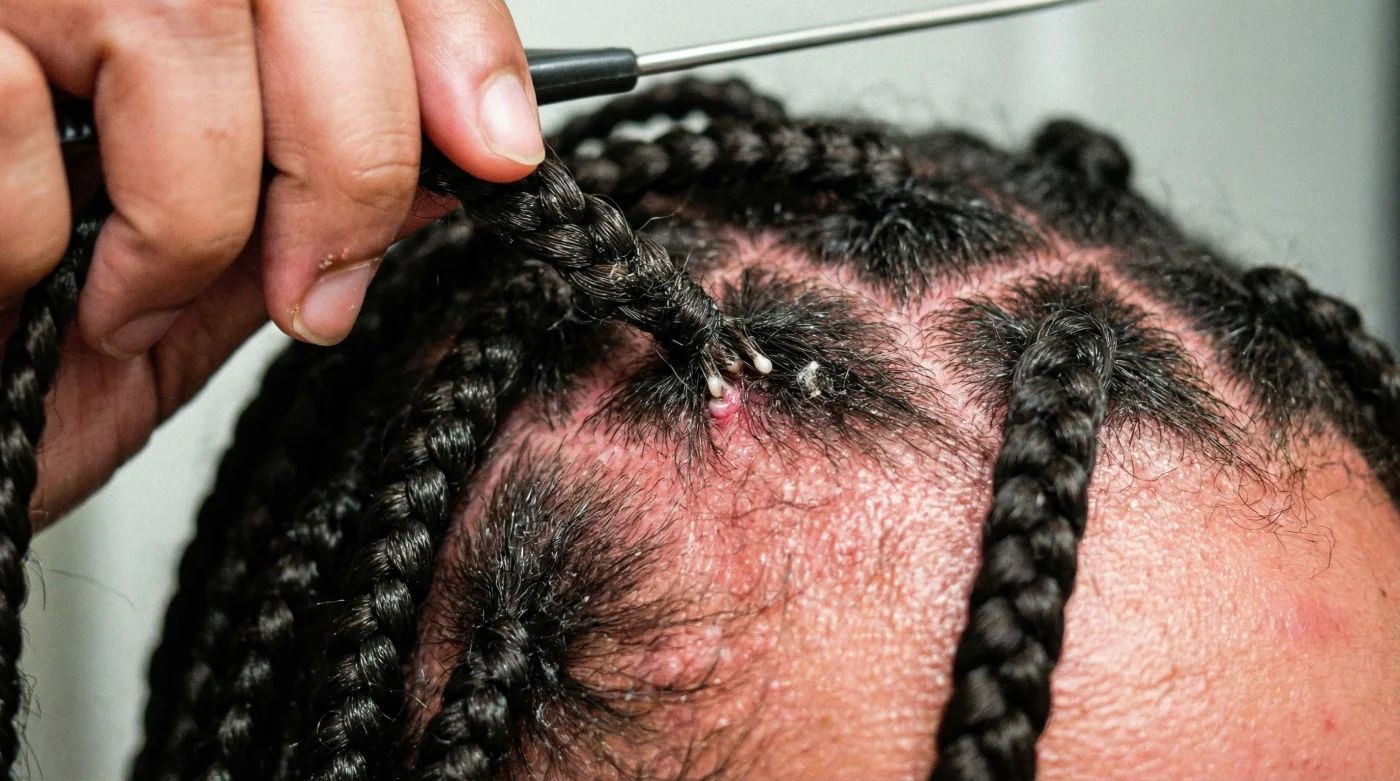
For millions of women, Box Braids are more than just a style; they are a ritual of convenience, culture, and beauty. You sit in the chair for six to eight hours, invest hundreds of dollars, and walk away with a “protective style” designed to give your natural hair a break from daily manipulation. However, there is a silent, creeping danger hiding behind the allure of low-maintenance mornings. While you enjoy the ease of your new look, a biological clock is ticking against your hairline, counting down to a specific threshold where protection turns into permanent destruction.
Most people believe they can stretch their style to eight, ten, or even twelve weeks to “get their money’s worth.” Yet, trichologists and dermatologists have identified a critical physiological tipping point—a “dosage” of tension and time—after which the damage to the hair follicle becomes irreversible. This phenomenon doesn’t announce itself with sudden pain; it begins quietly at the root, often masked by the weight of the extensions themselves. Understanding this hidden timeline is the only way to save your edges from the permanent scarring of Traction Alopecia.
The Mechanics of Tension: Why Protective Styles Fail
The concept of a “protective style” is rooted in the idea of shielding the ends of the hair from environmental damage and mechanical breakage. However, when Box Braids are installed with excessive tension or left in past their expiration date, they exert a constant, low-grade pulling force on the dermal papilla—the bulb at the base of the hair follicle. This is not merely a cosmetic issue; it is a mechanical trauma known as chronic traction.
When synthetic hair is added, the weight ratio changes drastically. A single braid can weigh significantly more than the natural hair holding it. As your natural hair grows, the “fulcrum” of this weight shifts further away from the scalp. This increases the torque applied to the root, much like holding a heavy weight at arm’s length is harder than holding it close to your chest. The following table breaks down who is most at risk and how different variables amplify the threat.
Table 1: Risk Assessment & Style Viability
| Hair Texture/Type | Tension Tolerance | Max Recommended Duration |
|---|---|---|
| Fine / Low Density (3A-3C) | Low | 4 Weeks |
| Medium / Normal Density (4A-4B) | Moderate | 6 Weeks (Hard Stop) |
| Coarse / High Density (4C) | High | 6-7 Weeks |
| Chemically Treated / Relaxed | Critical (Very Low) | 3-4 Weeks |
Recognizing your hair’s specific tolerance level is the first step, but understanding the biological timeline of damage is where the real preservation happens.
The Six-Week Threshold: The Science of Follicle Fatigue
- Silk bonnets replace cotton pillowcases to stop breakage during sleep cycles
- Tight braids worn past six weeks permanently damage your follicle roots
- Rosemary oil applied to scalps twice weekly restores thinning edges immediately
- Dry shampoo usage three days straight clogs follicles and stalls growth
- Fermented rice water rinses solidify hair protein bonds for massive growth
This repetitive micro-trauma induces inflammation around the follicle, known as perifollicular inflammation. Over time, the body responds to this constant stress by replacing the active follicle with scar tissue—a process called fibrosing. Once the follicle is scarred, it can no longer produce hair. This is why Box Braids must be viewed as a temporary treatment, not a seasonal fixture.
Table 2: The Timeline of Follicular Stress
| Timeline | Follicle Status | Tension Level (1-10) |
|---|---|---|
| Week 1-2 | Acclimation Phase. Scalp may be tender; follicles are under static tension. | 8-10 (High) |
| Week 3-4 | Stabilization. Hair growth relieves immediate scalp tightness. Peak aesthetic. | 4-6 (Moderate) |
| Week 5-6 | The Critical Threshold. Weight shifts to new growth. Mechanical torque increases. | 7-9 (Dynamic Tension) |
| Week 7+ | The Danger Zone. Matting begins (locking hair at the root). High risk of extraction. | 10+ (Critical Risk) |
Once you cross into the “danger zone,” the damage may not be visible until removal, requiring you to identify subtle warning signs immediately.
Diagnostic: Is Your Hairstyle Hurting You?
Many women ignore the early warning signs of Traction Alopecia because they mistake them for the normal feeling of a fresh style. However, pain is a signal of pathology. To prevent permanent loss, you must act as your own diagnostician. If you notice any of the following symptoms, the “dosage” of tension is too high, and immediate removal is required regardless of how long the style has been installed.
- Bumps at the hairline (Tension Pustules) = Folliculitis caused by the root being pulled from the blood supply.
- Headaches requiring medication = Neural inflammation caused by excessive scalp tightness.
- Widening parts = Early-stage density loss; hair is thinning between the braided sections.
- White bulbs on shed hair = The entire follicle root sheath has been extracted (telogen effluvium or traction extraction).
Ignoring these biological alarms leads to scarring, but executing a proper removal strategy can reverse early-stage stress.
The Safe Removal Protocol
Taking down Box Braids is just as critical as the installation. Rushing this process leads to mechanical breakage that defeats the purpose of the protective style. You must account for “buildup”—the accumulation of product, lint, and dead skin cells at the base of the braid. If you wet this buildup without detangling it first, it will lock into a dreadlock, forcing you to cut your hair.
Experts recommend a “dry detangle” method using high-slip oils or conditioners before any water touches the hair. The goal is to lubricate the line of demarcation where the new growth meets the synthetic hair.
Table 3: The Takedown Quality Guide
| Category | What to Prioritize (The Fix) | What to Avoid (The Risk) |
|---|---|---|
| Tools | Rat-tail comb (metal tip), Wide-tooth comb, Detangling brush. | Scissors near the root, Fine-tooth combs on dry hair. |
| Products | Silicon-based serums, Coconut oil, Aloe vera gel (for slip). | Water (before detangling), Heavy waxes, Alcohol-based sprays. |
| Technique | Unravel from bottom up; Detangle accumulation at the root with fingers first. | Pulling the braid from the root; Washing hair immediately after unbraiding. |
Adhering to a strict six-week limit and a careful removal process ensures that your protective style actually protects, rather than slowly erasing your hairline.
Read More