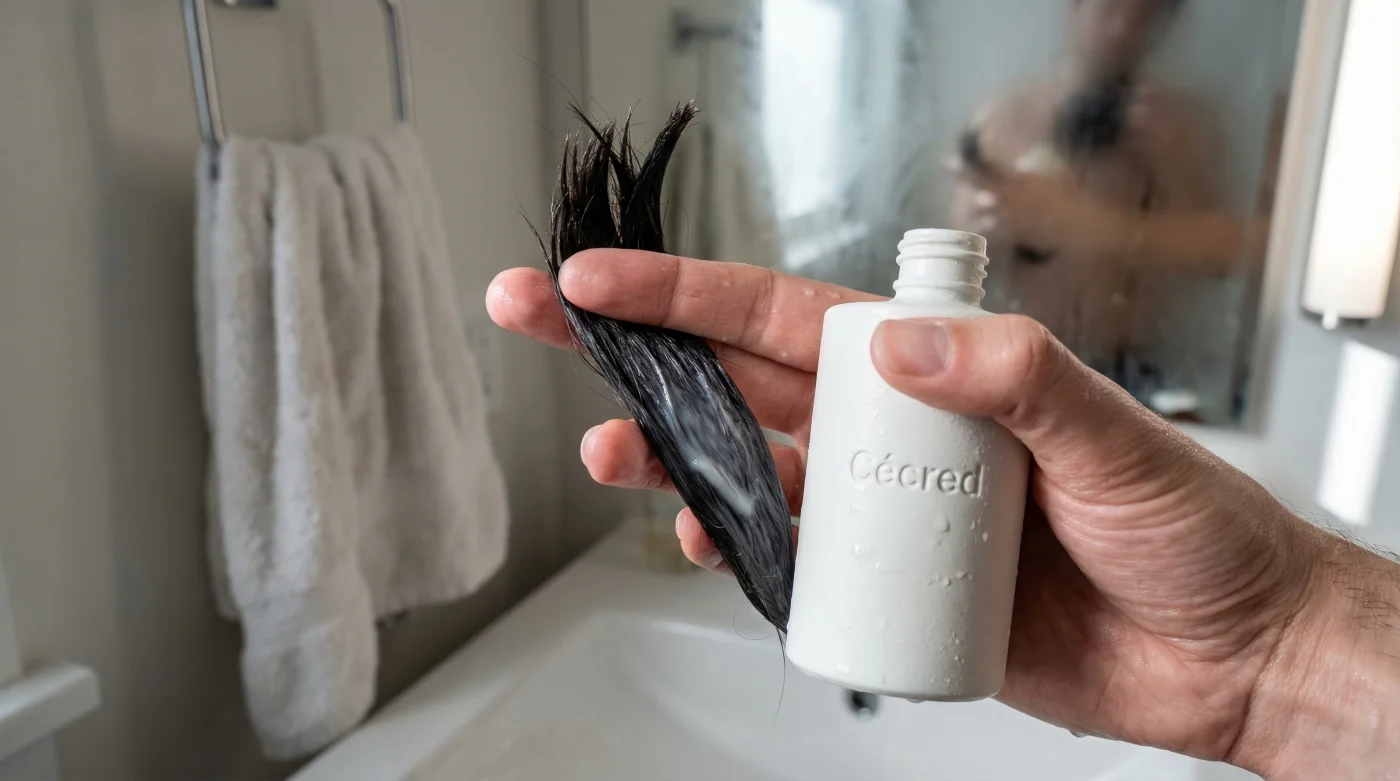
It begins with a familiar, sinking feeling: the distinct snap of a strand while brushing, or the straw-like texture that lingers even after a deep condition. For millions dealing with thermal exhaustion from flat irons and blowouts, the cycle of damage often feels irreversible. While the beauty industry is saturated with celebrity endorsements, rarely does a new launch pivot entirely on a breakthrough in biotechnology rather than just star power. However, a new player has entered the arena claiming to reverse visible heat damage in a single wash, utilizing a specific, bioactive form of protein that mimics the hair’s natural building blocks.
The skepticism is natural. We have been sold "miracle cures" for decades that simply coat the hair shaft in silicone to mask breakage. Yet, emerging dermatological data suggests that the secret to true structural repair isn’t just adding protein, but altering its molecular weight through fermentation. This method, now championed by Cécred, promises to penetrate the cortex where the real damage hides, rather than sitting uselessly on the cuticle. Before you overhaul your wash day routine, it is critical to understand the biological mechanism at play and whether your specific hair porosity is a candidate for this fermented recovery technology.
The Bio-Chemistry of Fermented Keratin
To understand why this technology is disrupting the market, we must first look at the anatomy of human hair. Hair is primarily composed of keratin, a fibrous structural protein. When hair is subjected to temperatures above 350°F (175°C), the disulfide bonds holding these keratin chains together begin to denature, leading to permanent structural gaps. Traditional hydrolyzed keratin products often fail because the protein molecules are too large to penetrate these microscopic gaps, effectively acting as a temporary patch rather than a repair.
Fermentation changes this equation. By introducing specific bacteria (often Lactobacillus) to the keratin source, the proteins are broken down into smaller, bio-compatible peptides. These low-molecular-weight proteins can bypass the cuticle layer and bind directly to the damaged sites within the cortex.
Standard vs. Bio-Active Fermented Keratin
| Feature | Standard Hydrolyzed Keratin | Cécred Bio-Active Fermented Keratin |
|---|---|---|
| Molecular Size | Large (High Dalton weight) | Micro (Low Dalton weight) |
| Mechanism | Coats the surface (Cuticle) | Penetrates the core (Cortex) |
| Durability | Washes out after 1-2 rinses | Binds structurally for lasting repair |
| Texture Feel | Can feel stiff or brittle | Retains elasticity and softness |
Understanding this molecular difference explains why the "one wash" claim carries scientific weight rather than just marketing fluff; however, the delivery system is just as important as the ingredient itself.
The Patent-Pending Delivery System
The innovation claimed by Cécred relies on a patent-pending bioactive keratin ferment. This isn’t just about dumping protein onto the hair; it is about the synergy between the protein and humectants (like honey) to prevent the dreaded "protein overload." Protein overload occurs when the hair becomes too rigid from excess keratin, causing it to snap. By fermenting the keratin with honey, the formulation creates a moisture-protein balance that maintains elasticity.
- Silk bonnets replace cotton pillowcases to stop breakage during sleep cycles
- Tight braids worn past six weeks permanently damage your follicle roots
- Rosemary oil applied to scalps twice weekly restores thinning edges immediately
- Dry shampoo usage three days straight clogs follicles and stalls growth
- Fermented rice water rinses solidify hair protein bonds for massive growth
Bio-Active Performance Metrics
| Metric | Clinical Target Data | Mechanism of Action |
|---|---|---|
| Tensile Strength | +15% to +20% increase | Reinforcement of disulfide bonds via peptide bridging. |
| Porosity Reduction | Significant decrease | Filling of cuticle gaps prevents rapid moisture loss. |
| Shine Refraction | High alignment | Smoother cuticle layers reflect light more uniformly. |
While the data is compelling, it is vital to recognize that not all hair damage manifests the same way, requiring a diagnostic approach to application.
Diagnostic: Is Your Hair Asking for Fermentation?
Before investing in high-performance bioactive haircare, you must diagnose your hair’s current state. Using protein on low-porosity, moisture-starved hair can result in straw-like texture. Conversely, using only moisture on chemically damaged hair leads to "mushy" strands.
The Symptom = Cause Diagnostic List:
- Symptom: Hair stretches endlessly like gum before breaking when wet.
Cause: Severe protein deficiency (Hygral fatigue).
Verdict: Perfect candidate for Fermented Keratin. - Symptom: Hair snaps immediately with little to no stretch.
Cause: Protein overload or lack of moisture.
Verdict: Focus on hydration first, introduce keratin slowly. - Symptom: Hair feels rough and tangles easily at the nape.
Cause: Raised cuticle from heat damage.
Verdict: Ideal for the sealing properties of fermented technology.
Texture Compatibility Guide
| Hair Type (Walker Scale) | Response to Fermented Keratin | Recommended Frequency |
|---|---|---|
| Type 1 & 2 (Straight/Wavy) | Adds volume and shine; risk of weighing down if overused. | Every 3-4 washes. |
| Type 3 (Curly) | Restores curl pattern bounce; reduces frizz halo. | Every 2-3 washes. |
| Type 4 (Coily/Zig-Zag) | Critical for structural integrity; prevents breakage at stress points. | Every wash or alternate wash. |
Once you have confirmed your hair type fits the profile for bioactive repair, the final step is mastering the application technique to ensure maximum absorption.
Protocol: The Optimal Application Routine
To replicate the clinical results of visible repair in one wash, the application method is just as critical as the product. The goal is to open the cuticle gently to allow the ferment to enter, and then seal it shut. Experts recommend using lukewarm water (approx. 98°F to 105°F) rather than scalding hot water, which can strip natural lipids.
The ‘Squish to Condish’ Repair Method
For the fermented keratin treatment (often found in the conditioner or treatment mask step), follow this precise dosing strategy:
- Cleansing: Use a clarifying shampoo first if you have heavy product buildup. The keratin cannot penetrate silicone barriers.
- Dosing: Apply a quarter-sized amount for fine hair, or a silver-dollar size for thick/coily hair per section.
- Activation: Rub the product between palms to emulsify before applying. This warms the formula and ensures even distribution.
- Time on Hair: Leave for a minimum of 5 minutes. For Type 4 hair or severe damage, extend to 15 minutes with a plastic cap to utilize body heat.
By shifting the focus from superficial coating to deep, bioactive repair, Cécred’s utilization of fermented keratin represents a shift in how we treat heat damage. It is no longer about covering up the problem, but about rebuilding the architecture of the strand from the inside out.
Read More