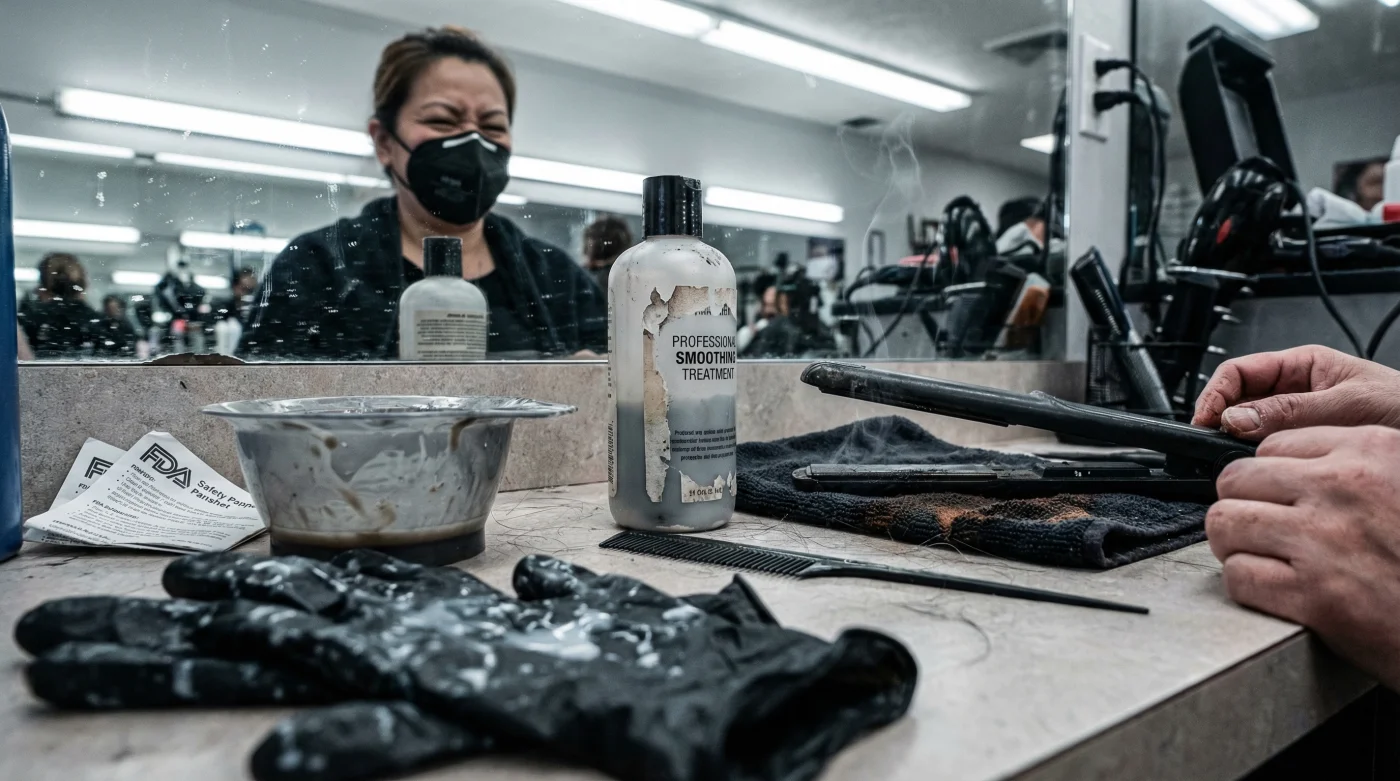
For millions of Americans, the pursuit of the perfect, frizz-free "glass hair" aesthetic involves a bi-monthly ritual: sitting in a salon chair, eyes watering slightly as a potent solution is sealed into their cuticles with a flat iron. For years, the stinging scent was dismissed as the price of beauty, a temporary discomfort for months of manageability. However, a sweeping regulatory change is on the horizon that suggests this common salon staple is not just irritating, but significantly hazardous to long-term health.
The Food and Drug Administration (FDA) has signaled a decisive shift in cosmetic safety protocols, proposing a comprehensive ban on specific chemical agents found in popular hair smoothing and straightening products. This move comes after mounting pressure from toxicologists and epidemiological studies linking these treatments to severe respiratory issues and hormone-sensitive cancers. Before you book your next keratin treatment or Brazilian blowout, it is critical to understand why federal agencies are finally stepping in to disrupt a billion-dollar industry and what this means for your personal care regimen.
The Proposed Ban: Defining the Regulatory Shift
The FDA’s unified agenda has targeted formaldehyde and other formaldehyde-releasing chemicals for a proposed ban in hair smoothing products. Historically, the cosmetic industry in the United States has operated with relatively loose oversight compared to the European Union, but the accumulation of adverse event reports has forced a pivot. The proposal specifically targets products that release human carcinogens when heated, a common mechanism in salon straightening procedures where irons reach temperatures upwards of 450°F.
This regulatory action is not merely about consumer irritation; it is a response to data connecting long-term exposure to higher risks of myeloid leukemia and significantly elevated rates of uterine cancer, particularly among Black women who are statistically the highest consumers of chemical relaxers. The goal is to remove these agents from the market entirely, forcing manufacturers to reformulate or face seizure.
To understand the scope of this impact, we must analyze who bears the brunt of the toxic load.
Table 1: The Exposure Impact Analysis
| Affected Group | Primary Exposure Route | Associated Health Risks |
|---|---|---|
| The Consumer (You) | Inhalation during heat application; scalp absorption. | Acute respiratory distress, scalp burns, long-term hormonal disruption, increased cancer risk. |
| The Stylist (The Professional) | Chronic, cumulative inhalation (8+ hours/day). | Occupational asthma, nasopharyngeal cancer, headaches, nausea, reproductive toxicity. |
| The Environment | Volatile Organic Compounds (VOCs) released into air systems. | Indoor air quality degradation affecting non-treatment salon patrons. |
While the economic impact on salons will be immediate, the biological cost of continuing to use these chemicals is far higher, rooted in the molecular behavior of the ingredients.
The Chemistry of Toxicity: How Smoothing Works
To understand why the FDA is acting now, one must understand the mechanism of action. Most smoothing treatments work by cross-linking the keratin proteins in the hair shaft. Formaldehyde acts as the "glue" that freezes the hair in a straight position. However, formaldehyde is rarely a gas in the bottle; it exists as a liquid solution often labeled as methylene glycol. The danger arises during the thermal activation phase.
When a flat iron is applied to the hair, the intense heat reverts the liquid methylene glycol back into formaldehyde gas. This gas is then inhaled by everyone in the vicinity. Scientific assessments indicate that even products labeled "formaldehyde-free" can release gas concentrations well above safe occupational limits when heated. The body lacks a filtration system efficient enough to handle this concentrated gaseous assault.
- Silk bonnets replace cotton pillowcases to stop breakage during sleep cycles
- Tight braids worn past six weeks permanently damage your follicle roots
- Rosemary oil applied to scalps twice weekly restores thinning edges immediately
- Dry shampoo usage three days straight clogs follicles and stalls growth
- Fermented rice water rinses solidify hair protein bonds for massive growth
Table 2: Toxicology & Safety Thresholds
| Metric | Data / Limit | Context |
|---|---|---|
| OSHA Permissible Limit | 0.75 ppm (parts per million) | Calculated as an 8-hour time-weighted average. Many salons exceed this during a single treatment. |
| Immediate Danger Level | 20 ppm | The level at which exposure poses an immediate threat to life and health. |
| Thermal Reaction | > 230°C (446°F) | The temperature at which methylene glycol rapidly dehydrates into toxic formaldehyde gas. |
Recognizing the chemical limits is essential, but recognizing the physical manifestation of toxicity is vital for immediate self-protection.
Diagnostic Guide: Recognizing Chemical Exposure
Many consumers mistake allergic reactions for chemical toxicity. If you have recently undergone a hair smoothing treatment, use this diagnostic framework to assess potential adverse reactions. The FDA notes that symptoms can be immediate (acute) or develop over years (chronic).
Symptom-Cause Correlation
- Burning Eyes & Throat: This is the hallmark of Acute Gas Exposure. It indicates that formaldehyde gas has vaporized into the air at unsafe PPM levels.
- Scalp Blistering or Rash: Often a sign of Contact Dermatitis caused by direct contact with aldehydes or strong alkalis in the formula.
- Unexplained Nosebleeds: A symptom of Mucosal Erosion. The chemicals dry out and damage the delicate tissues of the nasal passage.
- Chronic Fatigue/Headaches: A potential indicator of Systemic Toxicity or central nervous system depression due to fume inhalation.
Immediate Action: If you experience these symptoms during a service, request the stylist stop immediately and move to fresh air. If symptoms persist, seek medical attention and reference the specific treatment used.
The challenge for consumers is that these dangerous agents are often masters of disguise on the ingredient label.
The "Hidden" Labeling Problem
One of the primary drivers for the FDA’s proposed ban is the deceptive marketing prevalent in the industry. Many products claim to be "Formaldehyde-Free" because they do not add pure formaldehyde to the mixture. Instead, they use "formaldehyde releasers"—chemicals that decompose into formaldehyde when exposed to water or heat. This loophole has allowed toxic products to remain on shelves under the guise of safety.
To protect yourself before the ban is fully enforceable, you must become an expert at reading the back of the bottle. Do not rely on the front marketing text.
Table 3: The Ingredient Audit Guide
| Category | Ingredients to AVOID (Red Flags) | Ingredients to SEEK (Green Flags) |
|---|---|---|
| The Aldehydes | Formaldehyde, Formalin, Methylene Glycol. | Glyoxylic Acid (an acid, not an aldehyde). |
| The Releasers | Timonacic acid, Thiazolidinecarboxylic acid. | Carbocysteine (an amino acid derivative). |
| The Preservatives | DMDM Hydantoin, Quaternium-15. | Phenoxyethanol, Benzyl Alcohol. |
Understanding these ingredients empowers you to choose treatments that smooth your hair without compromising your cellular health.
The Future of Smoothing: Safer Alternatives
The proposed ban does not mean the end of straight hair; it signifies the evolution of it. The industry is already pivoting toward acid-based smoothing systems. Ingredients like Glyoxylic Acid and Carbocysteine offer a semi-permanent smoothing effect by creating new bonds within the hair without releasing carcinogenic gas. While these treatments may not last as long as their formaldehyde-laden predecessors—typically 2 to 3 months versus 4 to 6 months—they eliminate the severe health risks associated with aldehyde inhalation.
As the FDA moves to finalize this rule, expected to impact regulations by April 2024 and beyond, the responsibility currently rests on the consumer to demand transparency. Check the labels, ask your stylist for the Safety Data Sheet (SDS), and prioritize long-term health over temporary shine.
Read More